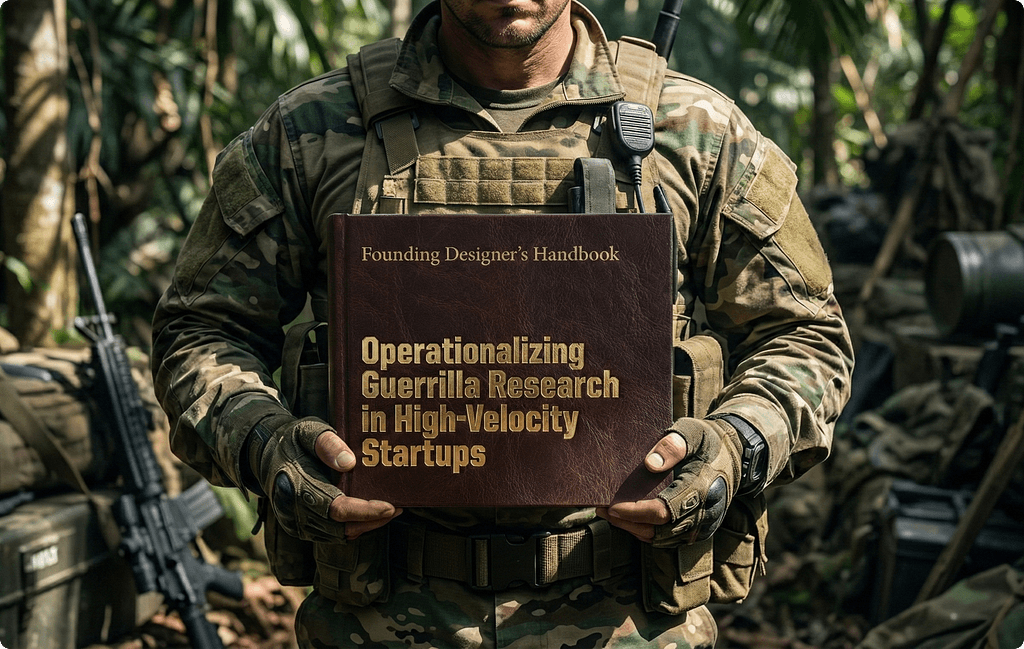
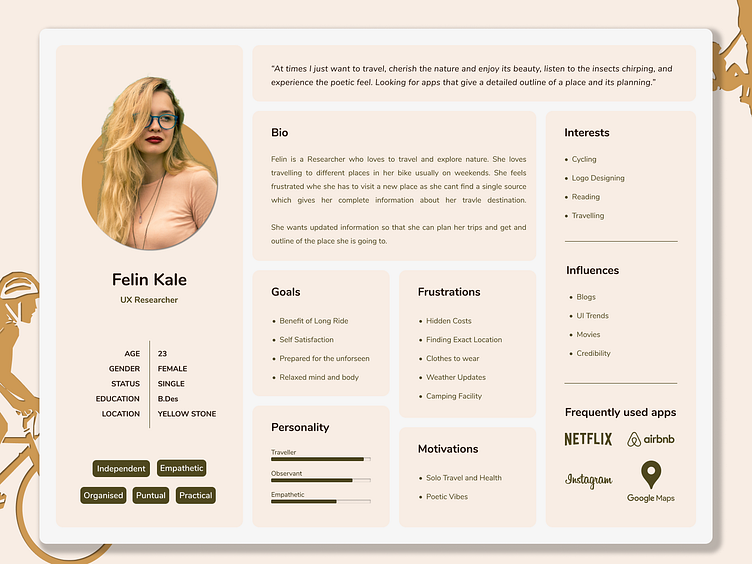
We’ve all seen it, The beautifully designed user personas, presented with fanfare, only to be relegated to a forgotten folder in a shared drive, collecting digital dust. They become stale artifacts, referenced in kickoff meetings and then promptly ignored. But what if this common failure isn’t an indictment of personas themselves, but of our outdated approach to creating and wielding them?
For UX practitioners, the challenge and opportunity is to elevate personas from decorative caricatures to dynamic, data-driven strategic assets that align teams, drive measurable business outcomes, and anchor the entire UX process in genuine user empathy. This guide moves beyond the 101-level definitions.
We’ll explore the strategic role of personas in fostering empathy and aligning teams, dive into a rigorous, data-backed methodology for their creation and validation, examine how leading companies like Spotify and Slack translate personas into concrete product decisions, and provide a practical framework for leveraging AI not to replace, but to augment our research and accelerate downstream UX tasks.
Summary
Persona-Led Features Drive Major Engagement
Spotify’s five listener personas directly informed the creation of its flagship “Discover Weekly” feature, which now reaches 200 million users every Monday. This demonstrates that making personas the approval gate for roadmap items can unlock mass-scale habit loops and significant user engagement.
Mixed-Methods Research Delivers Exponential ROI
Duolingo fused qualitative motivational research with quantitative analytics to address high user drop-off rates. This integrated approach led to a comprehensive gamification strategy that increased user retention from a mere 12% to 55% and accelerated overall growth by 350%. The takeaway is to require a mixed-methods evidence pack, combining interview quotes with KPI segments, before signing off on any persona profile.
AI is a Research Accelerant, Not an Autopilot
Leveraging Large Language Models (LLMs) to perform initial coding on qualitative data like interview transcripts can significantly accelerate thematic analysis. However, AI models can introduce bias or “hallucinate” findings not present in the data. The most effective workflow inserts a mandatory “human-in-the-loop” quality assurance step to review, refine, and validate every AI-generated suggestion, ensuring insights remain grounded in real user evidence.
Data-Grounded Personas Prevent Wasted Sprints
Teams that rely on assumption-based or “fictional” personas often see their work result in features that require endless redesign cycles because they don’t meet actual user needs. In contrast, a chatbot company which i was a part of, grounded its personas in real user data and behavioral metrics saw a 56% lift in its application conversion rate. The strategic imperative is to budget for foundational user interviews before any design kickoff to avoid building the wrong product.
The Strategic Power of Personas, From Empathy to Revenue
At its most basic, a user persona is a fictional archetype of a target user. But for a senior practitioner, this definition is merely the starting point. The true power of a persona lies not in its existence, but in its strategic application as a tool for empathy, alignment, and decision-making.
Personas are the most effective mechanism for fostering empathy at scale. Raw data, analytics, and survey results are essential, but they lack a human face. A well-crafted persona, grounded in qualitative research, translates abstract data points into a memorable, relatable character.
It gives teams a name and a story to connect with, moving beyond designing for a generic ‘user’ to solving problems for ‘Olivia, the Mood Listener’ (a Spotify persona) or ‘Irene Lam, the manager facing burnout’ (a Slack case study persona).
This humanization acts as a constant, empathetic reminder of who the product is for, especially in large or distributed organizations where direct contact with users is infrequent.
Furthermore, personas are a powerful alignment engine. They create a shared, precise vocabulary that cuts across departmental silos. When product, engineering, marketing, and sales all understand and reference ‘Parker the Product Manager’, they are operating from a unified understanding of the customer’s goals, pain points, and motivations. This shared context is invaluable. It streamlines communication, reduces decision-making churn, and ensures that from the initial marketing message to the final support ticket, the entire customer experience is cohesive. In complex B2B environments, mapping personas to the entire buying committee becomes a strategic blueprint for the go-to-market organization.
Finally, personas serve as a critical guardrail against self-referential design and feature creep. They provide a clear, evidence-based filter for every product decision. Instead of debating features based on personal opinion or the loudest voice in the room, the conversation shifts to
‘Does this feature genuinely address a core frustration for our primary persona?’ or ‘How does this align with their goals?’.
By anchoring the development process to the needs of a well-defined archetype, personas help teams prioritize what truly matters, prevent designing for every conceivable edge case, and avoid the trap of the ‘elastic user’(a vague user concept that can be stretched to fit any agenda).
5 Case Companies, 5 Persona Payoffs
The strategic value of personas is best illustrated by their real-world impact. Companies that invest in data-driven persona development consistently outperform those that don’t, shipping features that resonate and drive measurable business outcomes.
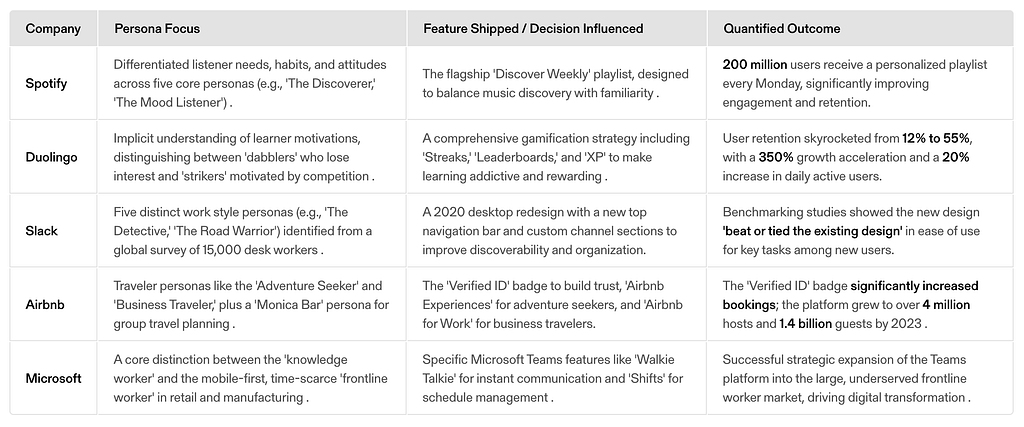
These cases prove that when personas are treated as strategic assets, they directly connect user empathy to bottom-line results.
Your 6-Step Story to Data-Driven Personas
Creating data-driven UX personas is a rigorous, multi-stage process that integrates quantitative and qualitative data to produce accurate and actionable user archetypes. While there are several types of personas, the most effective for the majority of teams is the Qualitative Persona, which is built on small-sample qualitative research like interviews and field studies to understand the ‘why’ behind user actions. It offers the best balance of effort versus value for embedding user-centricity into your process.
The persona story can be broken down into six steps:
Phase 1: Planning and Goal Definition
Clearly articulate the purpose of the personas and how they will guide decisions. Formulate a research plan identifying what you need to learn and the methods you’ll use.
Phase 2: Data Collection
Gather a holistic view by collecting quantitative data (web/product analytics, surveys) and qualitative data (user interviews, contextual inquiries, support tickets, customer feedback).
Phase 3: Data Analysis and Synthesis
Organize and analyze the collected data. Use statistical methods for quantitative data and thematic coding for qualitative data to identify recurring themes, behaviors, and characteristics. Group users into distinct segments based on these shared attributes.
Phase 4: Persona Profile Building
For each identified user segment (typically 3–5), create a detailed one-page profile. This deliverable, the Persona One-Pager, is a concise, scannable summary designed for rapid adoption by cross-functional teams. It should include a name, photo, goals, pain points, behaviors, motivations, a short bio, and a real quote from research that encapsulates their attitude.
Phase 5: Validation and Iteration
Treat personas as living documents. Validate their accuracy through follow-up interviews, usability testing, and continuous review of analytics data. Establish feedback loops for ongoing refinement.
Phase 6: Rollout and Application
Socialize the personas widely to ensure a shared understanding. Integrate them directly into your workflow by linking them in Jira tickets, displaying them on project dashboards, and using them to recruit for future research.
AI as Your Research Co-Pilot, Not Replacement
AI, particularly Large Language Models (LLMs), can act as a powerful assistant in the persona creation process, but it cannot replace the deep-human-centered skills of a researcher. AI excels at processing vast amounts of data and automating routine tasks, freeing you up to focus on strategy and connecting with users.
AI-Assisted Research Data Coding
After conducting interviews, you can use LLMs to process transcripts and suggest broad categories or themes for coding. The AI can identify patterns and group related data points, accelerating the initial phase of thematic analysis. However, human oversight is crucial. You must review and validate the AI’s suggestions to ensure they are based on true semantic meaning aligned with your research goals, not just syntactic similarity, and are free from algorithmic bias.
Prompting AI for Persona Generation
The key to leveraging AI effectively is mastering prompt engineering. Instead of a generic request, use a structured prompt that gives the AI clear context and constraints.
User Persona Prompt Template
I’m working on a [brief description of your product/service and what it helps users do]. Create a detailed user persona for a typical [target audience or user type] who would use this product. Include key demographics, goals, daily behaviors, motivations, frustrations, and any relevant tech habits or product expectations.
This prompt gives the AI a clear sense of what the product does, who it’s for, and what kind of insight you need back. You can guide the tone by asking for the persona to sound “grounded” or “ideal for pitching to stakeholders.” Including a feature list or product concept helps the AI paint an even more accurate picture.
For more advanced results, use the Persona Pattern (Role-Prompting) technique. This involves assigning a specific expert role to the AI to frame its knowledge and generate more contextually aware responses
Advanced Persona Prompt Example
Act as an expert user researcher with over a decade of experience in fintech. You are analyzing a set of anonymized user interview transcripts for a new savings roundup app. Based on the provided data, generate a detailed user persona for a primary user segment. In your response, first ‘show your reasoning’ by outlining the key themes you identified, and then present the full persona including goals, pain points, and a representative quote.
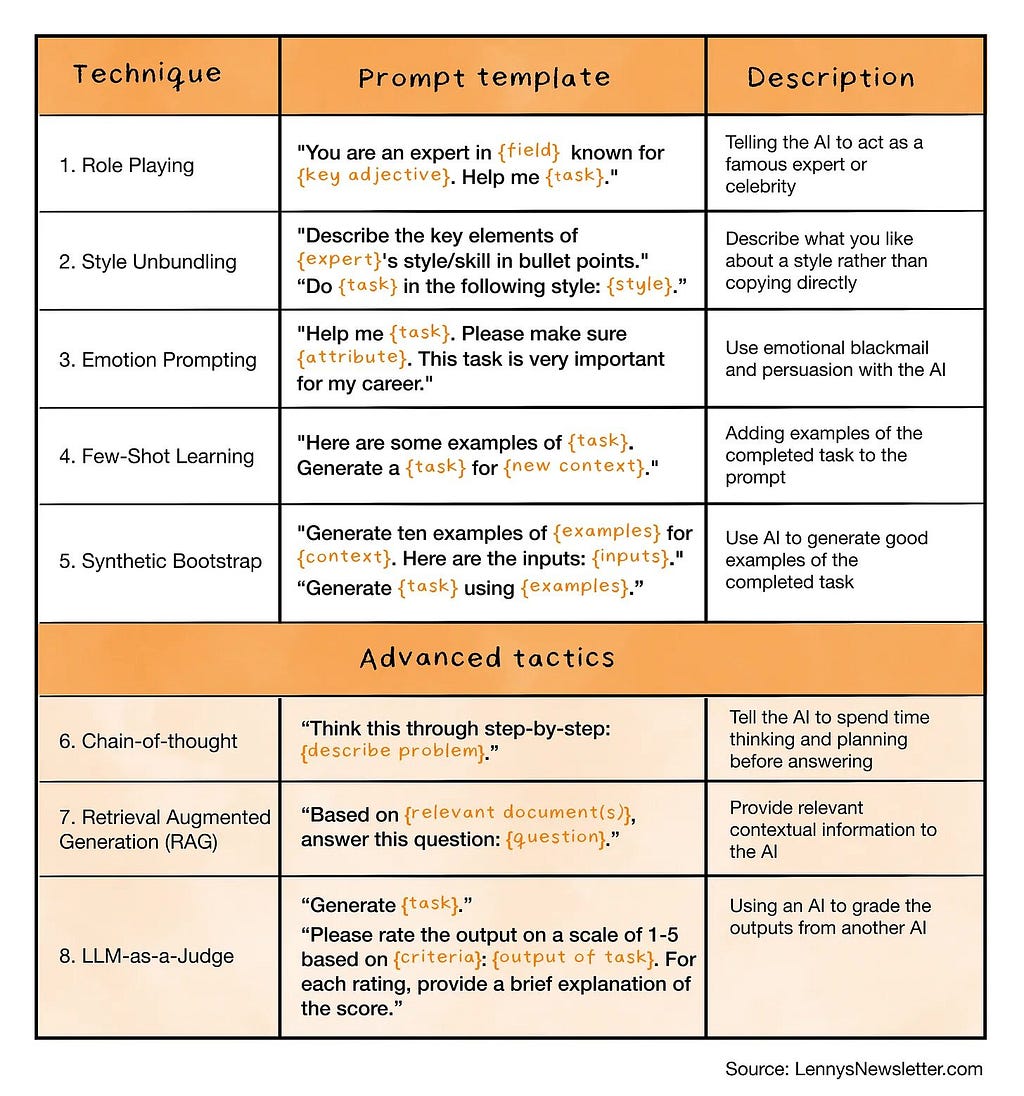
AI Opportunities vs. Human Oversight Risks
While AI offers significant advantages, it comes with inherent risks that demand human oversight.
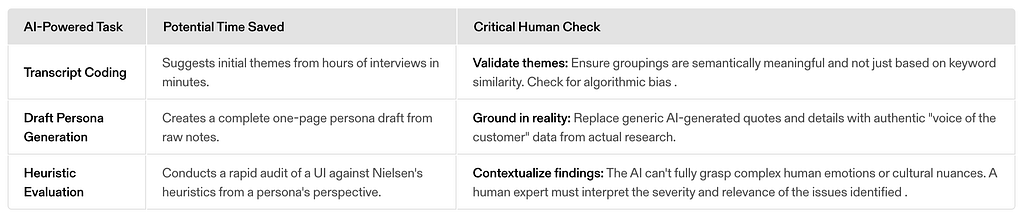
The rule is simple
Use AI to supplement your workflow, not to outsource your thinking.
Integrating Personas with JTBD & Downstream UX Tasks
Personas become even more powerful when integrated with other strategic frameworks. The most complementary is Jobs-to-Be-Done (JTBD).
The core difference is focus. Personas are about the ‘who’ (user goals, motivations, context), while JTBD is about the ‘what’ (the specific task a user ‘hires’ a product to do). Personas build empathy and highlight differences between user groups, whereas JTBD excels at defining the core problem.
Used together, they create a holistic view. JTBD helps you build the right product by defining the problem, and personas help you build the product right by tailoring the solution to specific user needs. You can align them by reformatting persona goals as JTBD statements
(“When [situation], I want to [motivation], so I can [outcome]”) or by creating hybrid “JTBD Personas”.
Measuring Success through Adopting KPIs and Business ROI
To prove that personas are making a difference, you must measure their effectiveness. This involves tracking both internal adoption and external business outcomes.
Adoption KPIs
Measure how well personas are being used internally with a mix of qualitative and quantitative metrics. Qualitatively, observe how often personas are mentioned in meetings and design reviews; high-performing teams reference them in over 70% of design discussions. Quantitatively, use analytics to track views on persona documents and measure the percentage of Jira tickets or PRDs that name a target persona.
Business Outcome Metrics
The ultimate goal is to tie personas to tangible business results. This requires setting up persona identifiers in your analytics and CRM platforms to segment core KPIs.
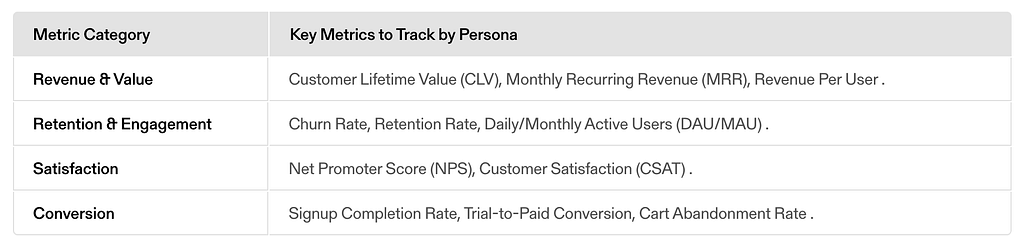
A chatbot company that I worked with, implemented this approach and saw a 56% lift in its application conversion rate by analyzing persona-specific behavioral metrics and making targeted design changes, demonstrating a clear ROI for their persona program.
Inclusive & Ethical Persona Development
Creating personas carries ethical responsibilities, especially regarding consent, bias, and representation.
Consent and PII Handling
All data handling must comply with regulations like GDPR and CCPA/CPRA. This means obtaining explicit consent, practicing data minimization, ensuring transparency, and using de-identification techniques like pseudonymisation to protect personally identifiable information (PII). For high-risk processing, such as large-scale profiling with AI, a Data Protection Impact Assessment (DPIA) is mandatory under GDPR.
Bias and Stereotype Mitigation
To avoid representational harm, you must proactively combat bias. Key practices include participatory research with marginalized communities, allowing participants to review and correct findings (member checking), focusing on functional diversity over demographics, and using inclusive language and imagery.
Accessibility and Disability Representation
To properly represent users with disabilities, create specific ‘accessibility personas’ based on research with disabled people. These personas should detail the disability type, assistive technologies used, and specific goals and frustrations. The W3C WAI provides excellent examples and user stories to guide this process. Importantly, accessibility considerations should be integrated into all personas to normalize disability and avoid ‘othering’.
Common Pitfalls & Anti-Patterns & How to Dodge Them
The most common pitfall is creating Fictional, Non-Data-Driven Personas.
Symptoms
Stakeholders dismiss the personas as “fake” or a “silly waste of time”. The personas are abstract, feature made-up quotes, and fail to inspire empathy or guide design decisions. The team is paralyzed by endless debates because there is no solid, user-centric foundation.
Remediation
Ground your personas in real, empirical user research. Conduct foundational qualitative research like interviews, use actual “voice of the customer” quotes, triangulate findings with quantitative data, and involve the entire cross-functional team in the synthesis process to build ownership.
Conclusion & Challenge to the Reader
In conclusion, user personas are far more than a checkbox in the UX process. They are the strategic bedrock of empathetic, user-centered design. By transforming raw data into relatable archetypes, they provide a common language that aligns product, design, and engineering teams around a shared understanding of the customer. We’ve explored how to move beyond flimsy, assumption-based characters to create robust, data-driven personas grounded in real user research. Whether you’re using lightweight proto-personas to kickstart a lean project or developing statistically-validated personas for a mature product, the key is to focus on the behaviors, goals, and pain points that drive design decisions. Furthermore, the strategic integration of AI can supercharge this process, helping to synthesize interview data, draft initial profiles, and generate downstream artifacts like user journeys. However, this power must be wielded with caution, using AI as a research assistant that is always grounded in real data and validated by human expertise to mitigate bias and hallucination. Ultimately, a well-crafted, actively maintained persona is a living tool that ensures you are not just building features, but solving real problems for real people, leading to more successful and impactful products.
Now it’s your turn to take one of these techniques and apply it this week. Try creating a ‘minimalist persona’ focused on a single key behavioral variable, or use the AI prompt template provided to synthesize your next batch of interview notes.
Personas: From Stale Artifacts to Strategic Assets with Data and AI was originally published in Bootcamp on Medium, where people are continuing the conversation by highlighting and responding to this story.