In the growing world of digital products, everyone talks or knows about “Technical debt”, these shortcuts in code that eventually demand payment with interest. But there’s a lesser-known cousin that often silently accumulates, leading to significant future costs: “Design debt”. If your product feels like a patchwork quilt with inconsistent UI, poor information architecture, unclear copy, and fractured UX, it’s likely plagued with design debt.
While a quick “design debt check” (which we will discuss and visit) can offer an immediate diagnostic. Truly understanding and addressing design debt requires an understanding into its origins, sneaky accumulation, and the comprehensive strategies to manage it.
What is Design Debt, Really? The Hidden Cost of Compromise
Design debt is essentially the accumulated cost of small compromises and shortcuts made during the design process, whether purposefully or due to constraints. These individual design decisions where changing a button color, padding, or a quick CSS fix might seem inconsequential initially, but they compound over time. It’s a problem where minor design issues gradually build up to become a substantial burden.
Think of it like deferred car maintenance. Skipping an oil change or tire rotation might seem fine in the short term, but eventually, you’ll face bigger problems like reduced fuel efficiency, unsettling noises, or even a breakdown. Similarly, design debt creeps up on organizations as they grow and isn’t noticed until there’s a major drag on efficiency.
It’s a cluttered closet that gets harder to clean the longer you put it off.
While it shares similarities with technical debt, both being “implied costs incurred when businesses don’t fix problems that will affect them in the future”. Design debt is fundamentally about the user experience and how it evolves over time. Unlike technical debt, which relates to underlying code, design debt is often more subjective and harder to detect. However, its impact is just as real, leading to a product that becomes bloated, hard to maintain, and inefficient.
It’s important to note that design debt isn’t always bad. Sometimes, strategic compromises are necessary to meet business goals or launch quickly. The key is to manage it efficiently rather than letting it spiral out of control.
The Sneaky Ways Design Debt Accumulates: Knowing the “Why”
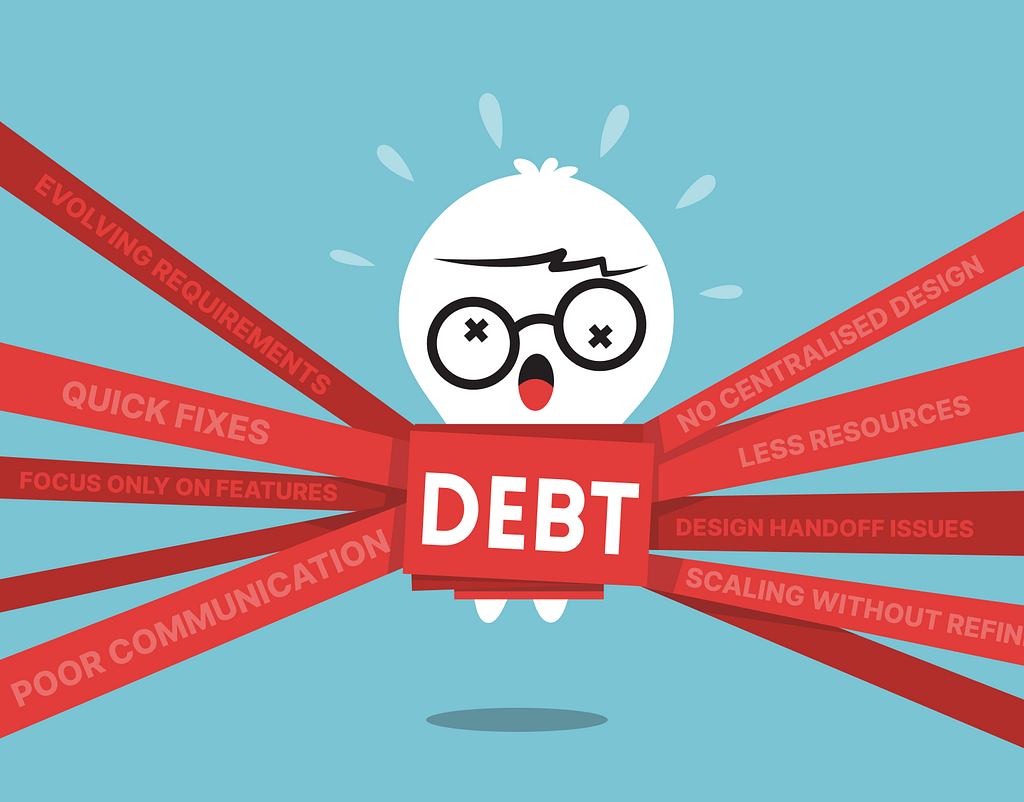
Design debt doesn’t happen overnight; it’s a gradual accumulation driven by various factors. Understanding these common causes is the first step toward prevention:
- Time Constraints and Rushing to Launch: Tight project timelines and the pressure to meet deadlines often lead to superficial design decisions and quick fixes that have a negative, lasting impact. Skipping essential steps like usability testing or thorough user research in the rush to develop a product faster inevitably builds debt.
- Lack of Resources or Investment in Design: Budget limitations, issues with team capacity, or simply not investing enough in design can force compromises. This might mean neglecting accessibility, foregoing user research, or moving directly to UI design without a well-defined design system or language.
- Poor Communication and Siloed Ways of Working: Misalignment among team members often results in duplicated efforts and inconsistency. When product managers define goals without involving designers or engineers, or designers work in their own bubbles without consulting peers, the solutions that emerge are often reduced to an MVP that isn’t truly valuable or usable. Engineers might be brought in too late, leading to them deviate from design due to feasibility issues or needing to fill with logic without a design reference.
- Evolving Requirements and Scaling Without Refining: As products mature and scale, new features are constantly added without always revisiting or integrating with existing ones. This can turn the product into a disjointed, inconsistent, and patched-together experience.
- Lack of Governance or a Centralized Design System: The absence of clear design standards, oversight, or a well-documented design system allows divergent practices to proliferate, resulting in an inconsistent user experience. Without intentional effort to align distributed design teams, the experience drifts away from its original cohesive roots.
- Designing for Features, Not Journeys: A common pitfall is focusing solely on individual features and their immediate outcomes, rather than understanding how they impact the entire customer journey. This iterative, feature-centric approach can introduce small frictions with each change, leading to a fragmented user experience over time.
- Not Solving Real User Problems: Despite aiming to be user-first, many teams build solutions without truly understanding their users “Why”. They might mistake business problems for user problems, or even invent problems users don’t have, leading to products that are unfit for user purpose, unintuitive, and visually inconsistent.
- Design Handoff Issues: Traditional design handoffs, seen as a singular event marking the end of design and start of engineering, can lead to missed edge-cases, ignored empty states, and impossible features making it into final designs due to a lack of early collaboration. This causes production to slowly drift away from design with each iteration, creating significant gaps that become design debt.
- Design Alignment and Skills Gaps: When distributed designers lack alignment or a design team has competency gaps across the full scale of design capabilities (from discovery to hi-fi prototyping), product quality suffers. This also extends to front-end and back-end engineers, as design debt often manifests in the code.
The Far-Reaching Consequences: Why Design Debt Matters Profoundly
Ignoring design debt is like racking up late fees. It grows quietly but costs loudly and can have serious ramifications across your organization:
Degraded User Experience (UX)
- Inconsistent User Interface (UI): Users encounter a patchwork UI with varying button styles, typography, and interaction patterns. This forces them to constantly relearn basic interactions, leading to frustration, disorientation, and eroded trust in the product’s quality.
- Confusing Navigation and Information Architecture: Quick fixes create a tangled web of navigation. Users get lost, abandon tasks, and feel overwhelmed, perceiving the product as complex and difficult to use.
- Reduced Usability and Efficiency: Design shortcuts often prioritize development speed over ease of use, leading to clunky workflows and inefficient interactions. Users spend more time completing tasks than they should, resulting in errors and reduced productivity.
- Increased Cognitive Load: Inconsistent design and convoluted navigation demand more mental effort from users, leading to fatigue, frustration, and decreased comprehension.
- Diminished Accessibility: Design debt often overlooks accessibility, creating barriers for users with disabilities through poor color contrast, small fonts, or difficult interactions, leading to exclusion and potential legal issues.
- Lost Revenue and Higher Drop-off Rates: Frustrated users are more likely to abandon their journey, leading to lower retention rates, lost engagement opportunities, and ultimately, lost revenue and a decline in market share.
Impact on Teams and Organization:
- Slower Teams and Workforce Frustration: Designers and developers spend unnecessary time untangling old UI, reinventing components, or fixing broken elements instead of innovating and creating new features. This workforce frustration can cause teams to burn out quickly.
- Increased Costs and Slower Time to Market: Duplicated efforts, tedious cleanup processes, and the need for significant redesign and redevelopment lead to wasted resources and higher development costs. It becomes more difficult to quickly introduce new products or features to market.
- Feature Hesitation: Teams may become reluctant to add new features, fearing that it will break this or add further complexity to an already disjointed system.
- Negative Brand Perception: A product with accumulated design debt reflects poorly on the brand. Users project the quality of the interface of the website onto the brand itself, unconsciously associating usability issues with the company’s overall quality, leading to marginal degradation of brands and reduced appeal.
- Reduced Team Morale: When designers and developers are constantly bogged down by minor changes that take disproportionate effort, it “disadvantages team morale”.
The Wall Of Fame For Unchecked Design Debt
The consequences of design debt are not just theoretical; they manifest in costly and frustrating real-world scenarios:
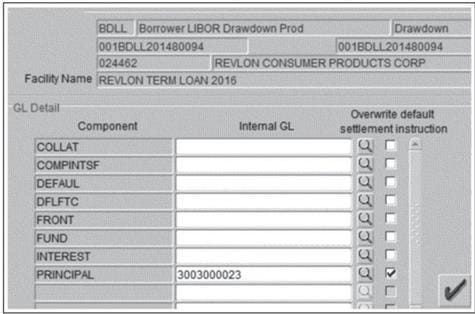
- Citibank’s $500 Million Mistake: In 2020, Citibank accidentally transferred $900 million instead of $7.8 million due to a “Poorly designed, confusing user interface” in its software. This costly design debt resulted in an irreversible financial loss, highlighting the critical need for clean interfaces in financial tasks.
- Amazon’s Return Page Mix-Up: Amazon’s return shipping page once displayed incorrect item counts, causing confusion and abandoned returns. This inconsistency led to increased customer service calls. By ensuring data accuracy and consistent design patterns, Amazon reduced errors and improved customer satisfaction.
- Kurt Geiger’s Brand Perception: Michal Mazur observed in a previous role at Kurt Geiger, a premium footwear brand, that users projected the quality of the website’s interface onto the brand itself. Sloppy navigation design and pesky marketing pop-ups discouraged fussy or impatient users from even reaching product pages, reducing brand appeal and conversion rates, signifying late fees on the debt.
- ICSC’s Proactive Maintenance (Foster Made): Foster Made partners with ICSC, a premier member organization. Despite having a design system, the need for quick market launches sometimes leads to design compromises. To prevent debt accumulation, a designer “sweeps through on a quarterly basis to tie up loose ends,” ensure accurate documentation, and archive unused elements. This consistent attention maintains functionality and brand identity.
- Atlas Meditech’s Redesign (Foster Made): The Atlas website, in use for many years, showed its age and struggled with consistency as new products were added. Foster Made undertook a “total redesign, setting them up for success with a clean, organized, and well-documented design system,” ensuring it would “continue looking great for years to come”.
From Quick Check to Comprehensive Strategy
While design debt is a natural side effect of growth, how you proactively prepare for it and respond to it makes all the difference. It’s an “ongoing process” that delivers the most value when continued over a long period.
1. Design Debt Check: This quick assessment is invaluable for a rapid health check. Take one to five minutes to click through your product and ask:
- Why is this here? If you pause or struggle to justify an element’s purpose or placement, it may indicate design debt.
- Does this match our brand/system? Outdated or inconsistent UI elements are strong signals of accumulated debt.
- Is this the simplest approach? Overly complex flows often reveal debt built from layered quick fixes over time.
This quick evaluation helps you quickly identify if inconsistencies are accumulating. It works because our brains crave simplicity and clarity, and cohesive interfaces build trust.
2. Implementing a Design System: The Proactive Defense The best way to avoid the consequences, is to mitigate the issues at the source by implementing a design system early. A design system is a toolkit that empowers an organization to create consistent products more efficiently. It includes:
- Design foundations: Typography, color, layout, spacing, icons, imagery.
- UI components: Reusable patterns like buttons, forms, cards, navigation.
- Documentation: Detailed annotations explaining how to use foundations, components, and patterns.
A well-planned and maintained design system ensures consistency across all UI elements and brings cohesion and consistency to the product. Neglecting it can severely impact the time it takes to create designs, confuse users, and increase development time for new features.
3. Conducting Regular Audits & UX Audits: Deep-Dive Identification Beyond the quick check, regular and structured audits are crucial. A UX audit holistically identifies and pays down design debt. Indicators that an audit is needed include an uptick in customer feedback, users abandoning tasks, or unexpected problems surfacing in user testing.
- Expert-Led: Unlike usability testing (which uses direct users), UX audits are performed by product experts who can assess design system breakdowns and identify solutions.
- Structured Approach: Define the scope (comprehensive or narrowed to problematic areas). Use heuristics (general usability principles like Nielsen’s 10) as an evaluation framework to ensure consistency and thoroughness.
- Prioritization: Assign severity rankings to findings (e.g., 1–5 scale) and assess effort or complexity to fix. This helps prioritize the greatest pain points and build an actionable plan.
- Quarterly Sweeps: As seen with ICSC, a designer can conduct quarterly sweeps to tie up loose ends, ensure accurate documentation, and archive anything that’s no longer being used.
4. Measuring Design Debt: Gaining Buy-in and Tracking Progress Measuring design debt is resource-intensive but necessary to establish a baseline, understand impact, assess urgency, and track progress. There are both qualitative and quantitative methods:
- UX Design Debt: Gather primary & secondary feedback via usability tests and cross-team inputs (support, sales, engineering). Track DAU/MAU, bounce rate, retention, NPS, and CSAT, with historical context.
- Visual Design Debt: Audit visual discrepancies through design-engineering reviews and subtle user cues (“feels outdated”). Track time designers spend on visual QA and engineers spend fixing UI inconsistencies.
- Operational Design Debt: Use team surveys and 1-on-1s to identify process and collaboration obstacles.
- Internal Processes: Measure prep vs. core work; high prep time signals resource/method issues.
- External Processes: Track time lost on avoidable handoff issues (late dev involvement, missed constraints).
5. Cultivating Collaboration and Refining Processes: Design debt often stems from breakdowns in communication and collaboration. Proactive steps include:
- Technical Retrospectives: While focused on code, the concept applies. Teams can create boards for designers/engineers to add stickies with elements slowing them down, then review, prioritize, and assign fixes in bi-weekly sessions.
- Design Reviews: Establish a structured system for collecting meaningful, actionable feedback. This involves different types of reviews: stakeholder reviews (for approval and brand alignment), peer design reviews (for insights from other designers), and customer design reviews (for raw, honest feedback from target users).
- Continuous Collaboration over “Handoff” Events: Instead of designers handing off work as a single event, encourage them to evolve their hi-fi prototypes with their engineers, not in a silo. This early and continuous collaboration catches missed edge-cases, ignored empty states, and unnecessary or impossible features.
- Fostering Communication: Ensure respectful communication patterns during feedback sessions, asking “why” something can be improved and fostering a culture of encouragement.
6. Prioritize, Execute, and Iterate: It’s impractical to tackle all design debt at once, as it could halt product development.
- Prioritize: Make a list of design debt, focusing on issues causing problems for users and consuming unnecessary resources for minor changes. Prioritize based on impact on user experience or design process, and the effort required to fix.
- Allocate Time: A good strategy is to allocate a portion of your team’s time every sprint to addressing design debt.
- Execute and Track: Once a plan is in place, begin removing the debt. Continuously track changes and their impact on user experience and business metrics to better manage your debt and ensure you are moving in the right direction.
Final Thoughts: Proactive Vigilance and Continuous Improvement
Design debt is an unavoidable byproduct of product growth and continuous development. However, how organizations proactively manage it, measure its impact, and commit to its reduction can drastically alter a product’s trajectory. From a quick check to comprehensive UX audits, robust design systems, and fostering deep cross-functional collaboration, the tools exist to keep this silent burden in check.
By consistently identifying and addressing these accumulated imperfections, organizations can avoid significant financial and operational costs, accelerate their speed-to-market, and most importantly, deliver a consistent, high-quality, and trustworthy user experience that delights users for years to come. Your work is “never done,” but the positive effects of continuous effort “grow exponentially”.
What Is Design Debt Really Costing Your Team? was originally published in Bootcamp on Medium, where people are continuing the conversation by highlighting and responding to this story.